Sleep Apnea
What it is, its risk factors, its health impacts, and how it can be treated
Sleep apnea is a common sleep disorder that causes frequent pauses in breathing during sleep. Most people with sleep apnea experience symptoms such as loud snoring and daytime sleepiness. The two main types of sleep apnea are obstructive sleep apnea (OSA) and central sleep apnea (CSA).
In OSA, a narrowing of the airway during sleep leads to breathing disruptions. In CSA, the breathing disruptions are caused by a lack of communication between the brain and the muscles involved in breathing.
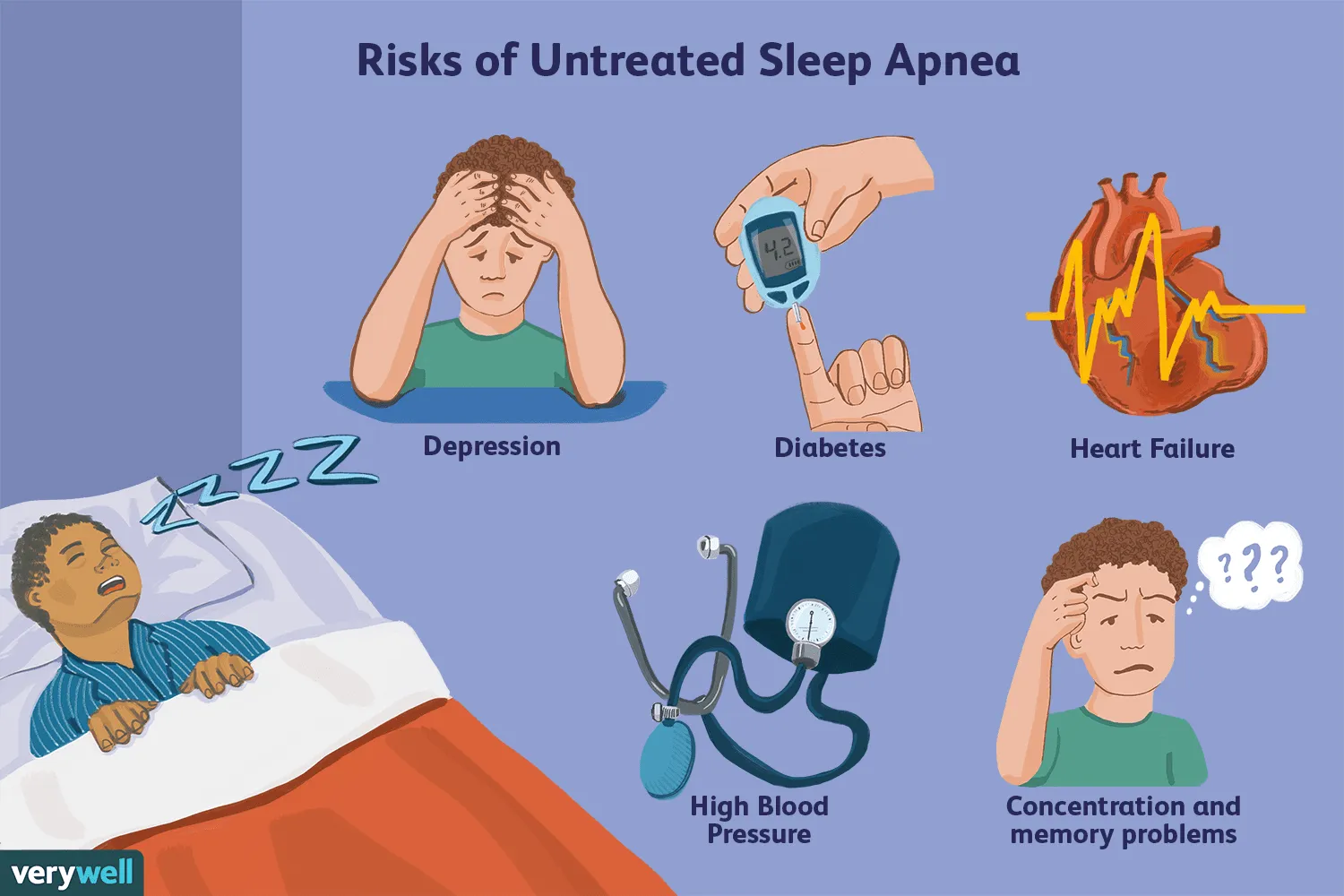
These breathing interruptions reduce the quality of sleep and, if left untreated, can lead to potentially serious health consequences. It’s critical to work with a doctor if you think you may be at risk for sleep apnea so that you can get any necessary testing and treatment.
What Is Sleep Apnea?
Sleep apnea is a type ofsleep-related breathing disorder, a group of sleep disorders characterized by abnormal breathing patterns during sleep.
People with sleep apnea repeatedly have reductions or pauses in breathing for brief periods while they sleep. Although these lapses cause a person to awaken periodically and reduce sleep quality, sleepers may not fully wake up and remain unaware that their nighttime breathing is abnormal.
There are several types of sleep apnea, categorized by the cause of breathing disruptions.
Obstructive sleep apnea
Obstructive sleep apnea (OSA) occurs when the airway at the back of the throat becomes constricted or blocked during sleep, which may cause snoring Trusted SourceMedline PlusMedlinePlus is an online health information resource for patients and their families and friends.View Source as air is prevented from passing through normally. In response to the airway obstruction, a person usually wakes up, engages the muscles in their throat, and takes several gasps or deep breaths, often accompanied by sounds like snorting or choking.
Obstructive sleep apnea is the most common type of sleep apnea. It is estimated to affect 10% to 30% of adults Trusted SourceUpToDateMore than 2 million healthcare providers around the world choose UpToDate to help make appropriate care decisions and drive better health outcomes. UpToDate delivers evidence-based clinical decision support that is clear, actionable, and rich with real-world insights.View Source in the United States but in many cases goes undiagnosed.
Central sleep apnea
Central sleep apnea (CSA) involves disruption in the communication between the brain and the muscles that control breathing Trusted SourceMerck ManualFirst published in 1899 as a small reference book for physicians and pharmacists, the Manual grew in size and scope to become one of the most widely used comprehensive medical resources for professionals and consumers.View Source . As a result, breathing may become shallower and have temporary pauses.
The prevalence of central sleep apnea is low compared to obstructive sleep apnea. It is estimated that less than 1% Trusted SourceMedscape ReferenceMedscape is on online destination for healthcare professionals worldwide, offering expert perspectives, drug and disease information, and professional education.View Source of people have CSA.
Keywords